
How to Refinish Wood Furniture
Refinishing wood furniture means bringing it back to life or giving it a fresh look. This usually involves cleaning, stripping or sanding, making repairs, applying stain, and then a protective finish. This guide from Falls Decor helps homeowners in Smiths Falls and Lanark County tackle these projects with reassurance, helping you avoid common pitfalls and achieve a durable, beautiful result.
Is your furniture a good candidate for refinishing?
Before you dive in, take a moment to assess your furniture. Not every piece is ideal for refinishing. Look for solid wood construction, not veneer or particle board, especially if you're planning on heavy sanding. Check for structural integrity; loose joints, major cracks, or extensive water damage can be difficult for a serious DIYer to repair properly. A piece with sentimental value or good bones is often worth the effort. For anything beyond minor repairs, consider whether the time and material investment is worth it, or if a simpler refresh like painting might be a better fit.
Tools and materials you'll need
Gathering the right tools and materials before you start will save you headaches later. You'll need safety gear: gloves, eye protection, and a respirator for fumes. For stripping, pick up a good quality furniture stripper (like MF Paints' own line), plastic scrapers, and steel wool. If sanding, an orbital sander with various grit sandpaper (from 80-grit to 220-grit) is essential. You'll also need wood filler for repairs, tack cloths, a wood conditioner, your chosen MF Paints stain or paint, and a protective topcoat (varnish, polyurethane, or lacquer). Our staff, some with over 20 years behind the counter, can tell you which MF Paints product works best for your specific wood type and desired finish, ensuring you have everything you need for a successful project.
- 1
Prepare the workspace:
Ensure good ventilation, lay down drop cloths, and remove all hardware from the furniture.
- 2
Clean the furniture:
Use a mild detergent and water to remove dirt and grime. Let it dry completely.
- 3
Strip or sand:
(See next section for guidance). Remove the old finish using your chosen method.
- 4
Make repairs:
Fill any dents, scratches, or holes with wood filler. Let it dry, then sand smooth.
- 5
Condition the wood:
Apply a wood conditioner, especially if using stain, to ensure even absorption and prevent blotchiness.
- 6
Apply stain or paint:
Follow product instructions for application. Apply thin, even coats, allowing proper drying time between each. If staining, wipe off excess before it dries.
- 7
Apply topcoat:
Once the stain or paint is fully cured, apply several thin coats of your protective topcoat. Lightly sand with very fine grit sandpaper (like 320-grit) between coats for a smoother finish. This is crucial for durability and protecting your hard work.
Stripping vs. sanding
Choosing between stripping and sanding depends on the existing finish and the condition of the wood. Stripping is ideal for removing thick, stubborn finishes like old varnish or multiple layers of paint, especially from intricate carvings or detailed areas where sanding is difficult. It's faster for heavy finishes but involves chemicals and requires careful cleanup. Sanding is better for thinner finishes, minor imperfections, or when you want to lighten the wood. It gives you more control over the wood's surface but can be time-consuming and dusty. Often, a combination of both is necessary, stripping the bulk of the old finish, then light sanding to smooth the surface and prepare it for the new coat.
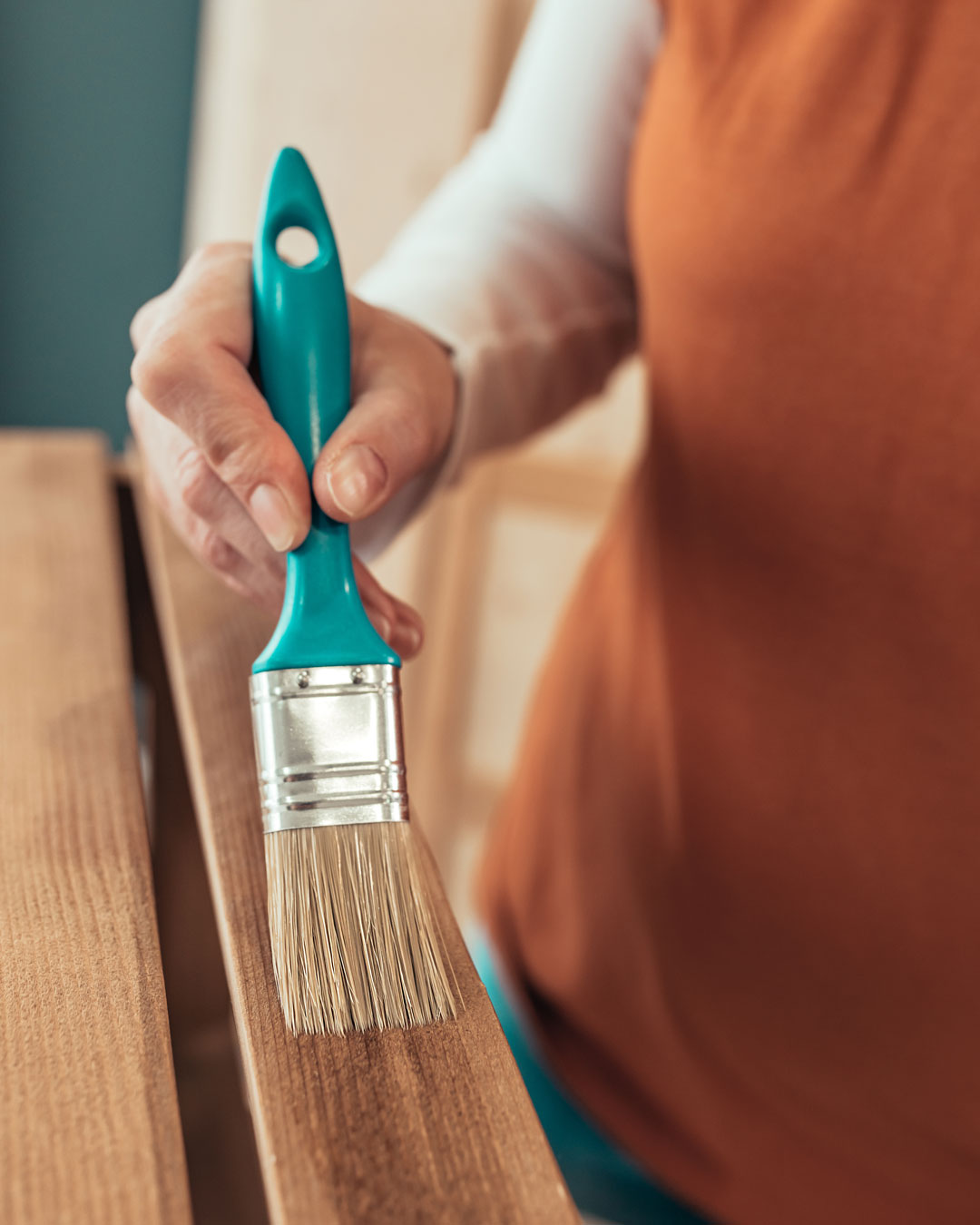
Get the Right Finish for Your Project
Whether you're aiming for a natural wood look or a bold painted statement, the finish makes all the difference. We'll help you choose the right MF Paints stain, paint, or clear coat to achieve your vision. From durable MF Portico varnishes for high-traffic surfaces to MF Summum for a luxurious, smooth paint finish, we have the products you need. Come visit us in Smiths Falls to see the options.
How to avoid common refinishing mistakes
The "I ruined it" fear is real when refinishing furniture. To avoid common mistakes, always test your chosen stain or paint on an inconspicuous area first. Don't rush the drying process between coats; patience is key to a smooth, durable finish. Over-sanding can damage veneers or create uneven surfaces, so always use a light touch and progress through grits. And perhaps most importantly, don't skimp on prep work; a poor foundation will show through the final finish. Our staff, with years of combined experience, can help you troubleshoot potential issues and recommend the right MF Paints products to prevent these common pitfalls, ensuring your project is a success.
When to call a professional vs. DIY
While many furniture refinishing projects are suitable for DIY, there are times when calling a professional is the smarter choice. If the piece is a valuable antique, has intricate carvings that are difficult to strip or sand, or requires extensive structural repairs, a professional can preserve its value and integrity. Similarly, if you're short on time, space, or simply don't have the patience for the meticulous work involved, a pro can deliver a flawless finish without the stress. For most everyday pieces, however, with the right guidance and MF Paints products from Falls Decor in Smiths Falls, you can achieve beautiful results yourself.
The questions we get asked most.
You can refinish most solid wood furniture, including oak, maple, cherry, pine, and mahogany. Veneer pieces can also be refinished, but require a much lighter touch with sanding to avoid going through the thin top layer. Particle board or MDF furniture is generally not suitable for traditional refinishing methods like stripping and heavy sanding.
The time it takes to refinish furniture varies greatly depending on the size of the piece, the complexity of its design, and the number of coats of finish you apply. A small, simple piece might take a weekend, while a large, intricate dresser could take several days or even weeks, factoring in drying and curing times for each product used.
Ideally, yes, for the best and most durable results, especially if you plan to stain the wood. If you're painting, you can often get away with just a thorough cleaning and light sanding to de-gloss the old finish, followed by a good primer like MF Proline. However, if the old finish is peeling or severely damaged, stripping is recommended regardless of whether you're staining or painting.
Yes, you can absolutely change the wood colour. If you're staining, you can go darker than the original wood, or use a bleaching product to lighten it before applying a new stain. If painting, you have limitless colour options. Falls Decor offers custom colour matching and a wide range of MF Paints colours to help you achieve your desired look for your project in Smiths Falls.
Most refinishing mistakes are fixable! If you get a drip in your stain or paint, carefully sand it down after it dries and reapply. If the colour isn't quite right, you might need to re-strip or re-sand and start that step over. Don't panic; our team at Falls Decor can offer advice on how to correct common errors and get your project back on track. We're here to help you get it right.